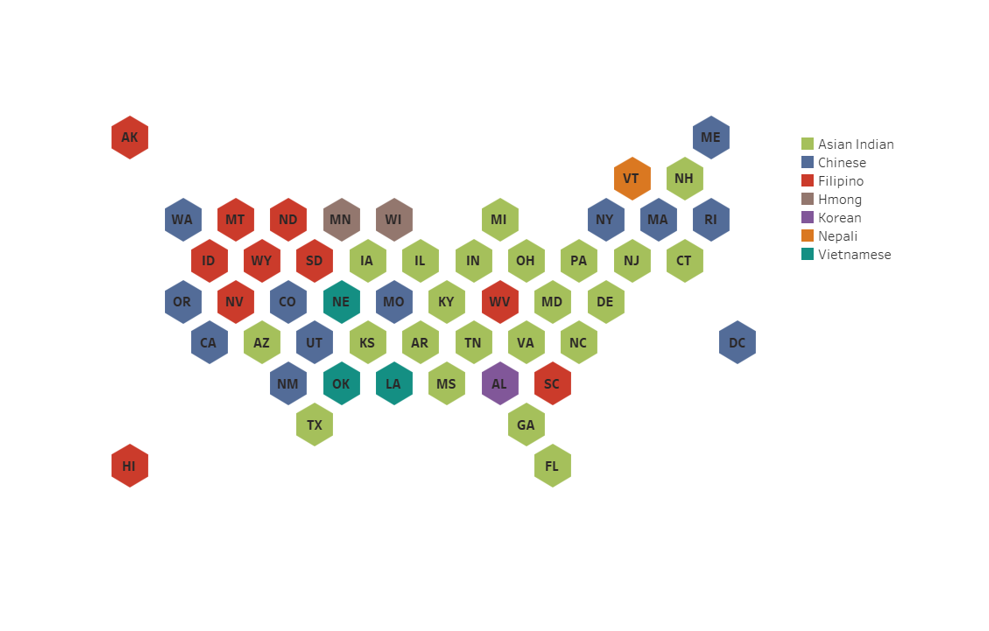
Looking beyond race: Americans' heritage reflects the globe
Disaggregating data by race is absolutely essential to unveiling the glaring inequities that exist in health care, housing, education, employment, and our criminal justice system. But we must also deepen our understanding of the “roots beyond race.” Doing so will help us dismantle the inequities that continue to plague our nation. And it is an essential step to help us better appreciate and integrate the cultural assets that each group brings to America, this country with a truly kaleidoscopic heritage.
Read More
United across the partisan divide
Since so much news is framed as a partisan battle, you might be asking yourself: “Do Republicans and Democrats agree on anything?” While the partisan divide among Americans may be as wide as ever, that split might best be described as existing in the top few layers of soil, under which lies a deeper bedrock of consensus; Republicans and Democrats still find agreement on a surprising range of topics.
Read More
State Fair fun: Minnesota by the numbers
The APM Research Lab’s world headquarters is in Minnesota, and our state fair is a great state fair! This fair season we are teaming up with our colleagues at MPR News to offer two fact-filled quizzes to test your knowledge about Minnesota—by the numbers. While not everyone is lucky enough to get their face carved in butter, anyone can demonstrate their love for facts.
Read More
The unequal counties of America
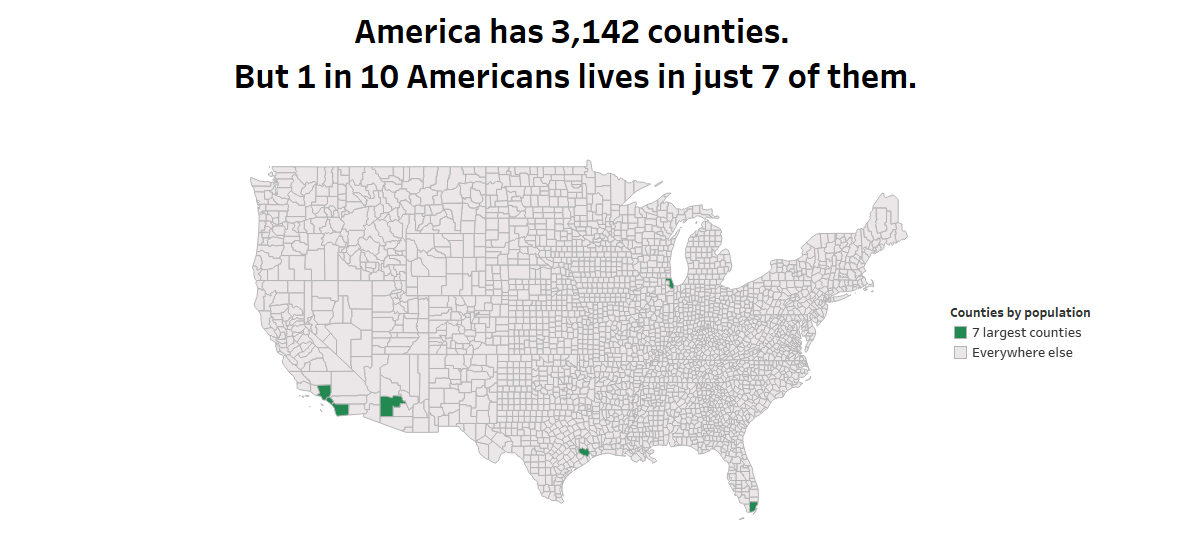
When it comes to describing how or what people are doing, county-level maps do an almost criminally poor job of revealing the status of most Americans. That’s because America is patchwork of 3,142 counties (or equivalents), but Americans are not equally fond of living in all of them. One in 10 Americans lives in just seven counties, and half of all Americans live in less than 5% of all counties. It’s no stretch to say that the manner in which county-level maps privilege spatial accuracy over demographic accuracy is undemocratic.
Read More
More Americans want mental health treatment, but that doesn't always mean they receive it.
May is Mental Health Month, and people are taking wellness seriously. But what does the research say about people’s experience with mental health and obtaining high-quality care? While desiring mental health care is common among Americans, cost, coverage, wait times, and geography currently hamper many as they seek care.
Read More
Latinos get louder (at the ballot box)
The collective voice of Latino voters was louder in the 2018 midterm elections than any other nonpresidential voting year in history. New data shows the voter turnout rate among eligible Latinos jumped 13 percentage points between the 2014 and 2018 midterm elections, to 40.4%. This enthusiastic leap in voting yielded an additional 4.9 Latino voters, or 11.7 million total. Explore what other features of Latino voting patterns in 2018 stood out.
Read More
The color of expertise
While “just the facts” has long been a journalistic credo, research shows that true objectivity is not attainable. Journalists make myriad choices about which facts to privilege, who gets to help communicate them, and how. In our recent survey of nearly 250 Minnesota media professionals, we asked how often People of Color and Indigenous (POCI) people are used as subject matter experts for stories that are not explicitly about race and culture. Seventy-two percent of all professionals surveyed said either rarely or never. Among journalists who themselves identified as POCI, that percentage rose to 84 percent.
Read More
Four things you should know about the opioid crisis in the United States
The deadly opioid crisis has attracted national media attention. This article offers a brief overview of the crisis, outlining what some researchers call “three intertwined epidemics”: the initial overprescription of opiates, rising deaths from heroin overdose, and finally the deadly impact of synthetic opioids like fentanyl.
Read More
April 1, 2020: Census Day is coming and it's no joke
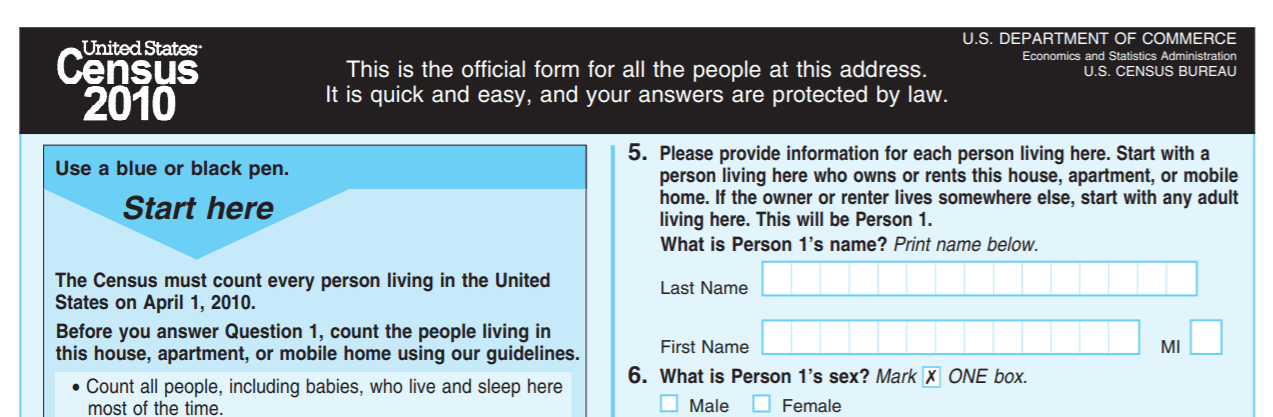
The 2020 Census has been in the news more than usual. Here’s six answers to your questions about the upcoming 2020 Census. Get up to speed on the status of question revisions (impacting race, same-sex partners, and possibly citizenship), which states may gain or lose congressional seats, when electoral votes could shift, and more.
Read More